Tuesday, December 2, 2008

Brakes

For a small country like Singapore, it’s amazing how many traffic lights you have to drive through every few meters or so. And on some days, it feels like you’re wrestling with a dragnet designed to turn red at every street corner. It can be rather frustrating when you’re impatient for time.

The fact is; many of us are so accustomed to speeding along in life that we often react to any delay or obstructions with predictable annoyance. Some drivers weave through traffic in their ridiculously pimped up machines as if the devil was on their tail, or their trunk was on fire. We want to get there first; we want to get there fast, and without any obstacles in our way.

As a driver myself I often notice that when I’m behind the wheel, I tend to look myopically ahead like a horse donning blinkers. I hardly perceive the scenes whisking by. Of course it’s partly out of safety that I keep my eyes to the front, but mostly it’s also because I’m so focused on the road ahead that I often miss the journey entirely. Indeed we can drive for years down the same stretch of road and never really notice the environment around us except for the endless stretch of grey ahead. We don’t notice the view; the flowers, the colors, and the attractions that accompany us on our journey until we let someone else take the wheels of our car. And whenever I’m fortunate enough to sit back as a passenger, I’m surprised to see how beautiful the world is outside.

Why are we so fixated on rushing through life, only to arrive often with disappointment? The time spent getting to our destination is often fraught with anxiety about what we’re going to do when we get there, who we’re going to meet, how we’re going to handle the various situations etc, that we’re almost fearing the arrival as much as we’re anxiously spurred on by an urge to be somewhere, to do something.

There was a time when people drove for the fun of being on the road, of spending time in each other’s company. Now it’s all about getting somewhere quick. In the past, the journey itself was the reward, getting there was just incidental. And people arrived at their destinations with greater satisfactions even though they may arrive later or take detours along the way. In fact, detours were welcomed as an adventure…knowing that as long as they experienced all things in love and companionship…even the difficulties along the way were redeemed as beautiful encounters.

Admittedly, many of us really need to slow down. Perhaps some of us even require emergency brakes to stop short of impending disaster. But when we can’t help ourselves because we’re so used to being the driver of our own destinies, what does God do to help us? I think he turns on the red lights in our lives, he throws up those obstacles and detours that annoy us so much because they delay our plans and disrupt our routes, but which ultimately save us from spiritual death or manslaughter.

Have you ever seen children running gleefully down a hill? In our youth, we ourselves have rolled down more than one slope, scraped more than one knee and sometimes broken more than a few bones. Despite natural feelings of caution that go off in our brains, our egos to compete, our greed for excitement and our pride in not losing out to anyone else effectively drown out whatever warnings our parents might give us.

As adults we continue to run recklessly down the hill of our lives without brakes. And even though God our Father asks us to slow down and to stop running, we don’t listen.

Sometimes he has to forcefully throw obstacles in the path to stop us from hurting others and ourselves. No one likes running into a wall, but sometimes a wall of love is the only buffer that can save us; much like an airbag in a car. Of course, it’s going to be painful. Of course it’s an experience that can be avoided in the first place. But when we get out of control, God has to activate the brakes and airbags in our lives to slow us down, to stop us in our tracks even, so that we may survive our mistakes despite our bruises.

What are the obstacles that have forced you to take a detour in life or to slow down? What are the walls that have been erected in your path, separating you from what you imagine to be your happiness and fulfillment?

Whether it’s the distress of a bad investment, or the cross of a debilitating illness, or the loss of a loved one, or the misunderstandings that lead to the end of a relationship, we’ve all experienced the frustrations of being thwarted in our plans and our hopes. And in the absence of supernatural faith, we can turn bitter with anger against God whom we see as the enemy to our happiness.

The truth is; God allows us to encounter these obstacles because of three things – love, love and love. We are going through our present difficulties because God loves us very much; not because he wishes us ill, but because he alone knows how much good can be born from our patient acceptance of our crosses. It is not good to be sad naturally, but faith in a heart that believes in the fidelity and loving will of God gives every Christian soul the strength, the courage and the supernatural hope to trust that God will bless the broken path that leads to real joy and happiness.

Yes, many of our crosses are of our own making. Many of our crosses could’ve been avoided. And many of our crosses are the direct results of our own bad choices in life…including a sinful life. We have insisted on driving through every red light, we have resisted every call to slow down and avoid running down steep hills for thrills, and we have purchased the pain of our actions through foolish pride and irresponsibility. And now that we are humiliated by our circumstances and our failures, we can finally relinquish our desperate mastership of our destinies to one who truly is King of our lives.

C.S. Lewis says, “Pain is God’s megaphone for rousing a deaf world”. And humility cannot be learnt except through humiliation. Yet it is humility that can begin the long path to healing and redemption; to recognize that we are not God, and in our prayers to let God be God in our lives; instead of taking that divine tone ourselves.

Just two Sundays ago, we celebrated the end of the Church’s liturgical year with the feast of Christ the King. In his time on earth, our Blessed Lord preached unceasingly of the Kingdom of God. But what is essential for a kingdom? Subjects surely, ministers, soldiers and various people with various talents who live their citizenship in this royal domain. But more than anyone else, a kingdom needs a king who is free to exercise his rightful place as sovereign and lord.

The Kingdom of God can be understood as the acceptance of and loving obedience to the kingship or lordship of Jesus in our person and in our lives. In other words, we give ourselves as humble subjects to our Lord, asking him to be master and lord, king and sovereign over our entire lives, and to establish his most holy and loving reign over our souls and our bodies; accepting the good and the bad from his hands, trusting in his divine will which expresses this kingship most clearly.

Know that God’s will is most clearly manifested in the events of our days, the opportunities of our lives, the chance encounters, the tiny crosses, the opened and closed doors, and the friendships, relationships and people who cross our paths…all of which are opportunities for grace and eternal happiness…if we start from today to listen to his voice so that we may see what he sees, hear what he hears, and desire what he desires for us.

But if we continue to cling to this obsession to be behind the wheel of our own lives, to keep in control, to be the master of our destinies when we often don’t even know where we’re going or dread going there if we do, we shall drive ourselves into a ditch of sadness, despair and enduring pain. Not just for ourselves, but also for those we love.

The roads of life are always changing, the maps are constantly evolving and obstacles are ever present. It takes someone with a towering view of things from the air, like a pilot in a helicopter, to be able to tell us what lies ahead, and what to avoid.

Only heaven can guide us to safety. As pilgrims on the road, we can’t see more than 300 meters ahead, and often there are obstructions in the way. Even then, bad weather or the darkness of night can make visibility even worse. But no darkness is as dark as sin, and no obstacle so insurmountable as stubbornness and pride. To continue down this path of neglect for our soul and our dignity is to drive off a cliff one day, dragging others with us.

So in this season of advent, slow down, take stock, stop to think, pray and look around you. Check your moral GPS, see where you are…and if you are lost and confused, come back to the Lord for he is waiting for you…just as the father in the Parable of the Prodigal Son stands on the brow of the hill looking out, and waiting for his child to return, so that his joy may be complete in you, and your joy may be real in Him.

Viva Christo Rey! Long live Christ the King!

Thursday, June 12, 2008

Memories

Yesterday, I popped into an old photo studio in my former neighbourhood for a peek.

In an age of digital photography, I was curious about how such an old-time business sustains itself. The owner, who is this wiry old man in his seventies was familiar to me. Uncle Han (in asia, we traditionally address anyone more senior, especially the elderly as uncles and aunties as a mark of respect even though the person could be a total stranger) and I got to talking, sitting down on old rattan chairs and sipping some really potent chinese coffee that was sure to keep me up for weeks. And in the course of our conversation (filled with much nostaligia and reminiscing), we got to talking about love. He got up and reached for an old album which he kept wrapped up in the silky folds of a ladies' scarf, and unbound a lifetime of youthful memories to share with me.

Mostly, it was filled with old pictures of himself as a young man standing next to the love of his life. She was a beautiful girl. They must've both been in their teens when these photos were taken. There is much to be said about subtlety, when so little is physically expressed but so much love, bonding and depth is evident from the simplest gestures and smiles. As uncle Han spoke, I could feel the deep stirrings of his heart for his childhood love. It was a tale of deep and earnest love, in a time when perseverence, forgiveness and commitment meant some things. Unfortunately, this precious love was cut short by the onset of war. With violence, oppression and danger came sickness, poverty and want. (Uncle Han belongs to a generation of old chinese men who still have difficulty forgiving the Japanese for the atrocities of the last century).

Amdist this historical struggle, this man suffered the personal tragedy of losing his love to pneumonia when no medical attention was possible or sufficient. Her parents were fearful of having him over since the Japanese kempetai (or secret police) was always on the lookout for young men to round up and execute. And communications and visits had to be sparse and cautious. Hence he was denied much contact with his love, although letters carried their hearts to each other whenever that was possible. And only after some weeks did he learn that she had passed on in the heart-rending loneliness of calling his name.

That was well over 60 years ago. Han survived the war, survived the difficult years of rebuilding that followed, settled down, got married, survived personal sickness and tragedies, survived his wife, survived the sweeping technologies that swept away a generation, but sitting there right next to me; his eyes brimmed with tears, he never survived the loss of his young love and I suspect he will continue to love her to the end.

There is something beautiful about love that perseveres even in the face of death. Today, we see so many relationships die because people have no idea at all about what it means to know real love and commitment. They're always searching for something grand and smooth that they don't see the extravagance of generosity and love in their difficulties, disagreements and struggles to stay together. Perhaps some will say that Han's longetivity in love is common in the face of love unfulfiled. Because he never had to live with his fiance, marry her, put up with her, quarrel with her and take her nonsense that his idealism remains intact, unsullied by reality and human imperfection. His memories of love in other words have preserved unnaturally his devotion to love.

I don't believe that to be true at all. Rather I believe that to be an excuse for people who lack any idealism, any hope, any true desire for love and commitment; which always comes with pain, sacrifice and above all, personal and lasting choice. I feel in my own heart great love for a relationship that has died and which was wrought with painful and disappointing moments. But I do not wish to turn my back on what is true in my heart, even though that love may not be appreciated nor reciprocated. Choosing to love beyond the transient separates us from beasts of gratification; whose choices are fleeting at best and prisoners to selfish satisfactions that have nothing to do with real love and devotion. We are not such beasts when we love with Christ and in Christ so that our relationships, our hearts and our romances may also be redeemed experiences that lift us up in our human and Christian dignity, not tear us down to vulgar commonality.

In that dingy, tiny photography studio with the blue doors and rattan chairs, I found real respect for the man who continues to develop memories for people when they bring in their own cameras, while cherishing his own memories in a celebration of lasting and faithful love - ever young, ever present, ever faithful, ever real.

And in that great hope of the resurrection, I pray our dear God to grant him the fulfillment of a lifetime and more - to one day finally hold his love in his arms, and to know her love for eternity.

I like this quote from Mother Teresa, and I share it here with you.

"Don't think that love, to be true, has to be extraordinary. What is necessary is to continue to love. How does a lamp burn, if it is not by the continuous feeding of little drops of oil? When there is no oil, there is no light and the bridegroom will say: "I do not know you". Dear friends, what are our drops of oil in our lamps? They are the small things from every day life: the joy, the generosity, the little good things, the humility and the patience. A simple thought for someone else. Our way to be silent, to listen, to forgive, to speak and to act. These are the real drops of oil that make our lamps burn vividly our whole life." – Mother Teresa

Sunday, January 6, 2008

By the light of the silvery moon

Let me share this letter I recently wrote to an overseas friend. Perhaps some of you struggle as we do with faith and hope. And if like me, you're a fellow pilgrim stumbling through your own dark night, let's give each other courage and keep our spirits up...the day is not far from us.

"Sometimes what we want to say, we need to say through a smile. And even though I can't see you in person, can't hear your heart rejoice, weep or sigh with closeness, I know the reality is that ever so often we can move each other to joy, to happiness and courage...and to a smile....even though to all appearances our lives seem so separated by distance - both far and near. For within ourselves we constantly struggle to come closer to meaning, to purpose and to peace. All of which is but a desire to come closer to love.

I know I sometimes come across as being utterly confident in faith and hope. But the opposite is true. Like most people, I walk the shadows of my world more uncertainly, more tepidly than I would like. And there are days when it feels so much easier to lie down among the shrubbery of indifference and despair, and simply recede into the darkness. It's hard to to know where to step in the dark, much less the way to happiness when we feel lost in the jungles of our own failures, weaknesses and pains. But as I lift my weary eyes ever so often to the dark clouds above, I spy the silvery light of the moon that accompanies me with her glow, as if to assure me that behind the blanket of dark clouds, light follows me with a mother's love, peering out ever so often with protective love to remind me that she is there, that I'm not alone, that in her light is the reflection of the sun and the dawn to come.

As children we all look out of a moving car and wonder why the moon seems to follow us on our drive home. And Mary has traditionally been identified with the moon who takes her light from Christ, lighting the way for poor sinners in darkness so that even though they trudge through the tired roads of this earth, their nights may not be without the solace and comfort of her gentle light...promising always the dawn of God's love in the morning.

We often don't see the struggles of the saints. In a society used to exposing the private musings of souls to the bright studio lights of talk shows and scandal, we've become ever more unsophisticated and impotent in understanding the sacred passages of the human heart.

Who alone knows the house we keep but God? Who alone truly understands the language of our human experiences? Even our conscience is a subjective guest in the mansions of our hearts when it is not grown in the gardens of truth and the gospel light.

Frequently we spy the outward happiness, fulfillment and faith of those we admire, and wonder why God has so abundantly shielded them from the dark despairs we encounter. Likewise we also gaze sadly upon the apparent indifference, tepidity and sloth of those we think irreligous and unaccomplished, and not know the house of faith, joy and spiritual wisdom some keep alive at home. As I read the lives of the saints (particularly the later ones whom we have more details about), I'm consoled to know how much alike they seem to us in their doubts, their struggles and temptations to give up.

Mother Teresa showed the world her real face of joy and faith while unknown to the world until now, she also had a real face of doubt, questions and weariness. Both faces were truly and genuinely Mother Teresa, each supporting the other in prayer, in commitment, in hope and faith, and in real fidelity to her humanity in Christ. And even though I personally see my face of despair and tiredness more frequently than my face of love and faith, I know there is yet in me the determination of a traveller, a pilgrim who has not given up on finding his way home even though the journey has been fraught with difficulties. Not because my trust in God is unwavering, but because I know between the night and the light of day, I must continue to hope in the dawn that takes its time to come, however late, even if that hope gives me only enough strength to take a few more steps under the weight of sadness or loneliness. Still, it is a few more steps forward, a few more moments to catch my breath, a few moments to gather courage and strength to move forward from one place to the next, although our human senses may not perceive any difference between where we are now, and where we were a few days ago, or last week, or a few months ago. But look...see how far we've come.

A rolling stone gathers no moss, and we must try and ensure that we are not tangled by the tendrils and moss of apathy, discouragement and despair in our spiritual journey. Let's move courageously onward, let's trudge on through the dryness of prayer, the painful lull of love, the lifting of our hearts to hope against hope, for the night does not last forever.

I'm not sure what difficulties you are encountering, and I'm embarrassed by your impressions of my faithfulness to God. In truth, I am nothing like that - I'm just a man who feels more sadness in my heart now than I have in recent years, but I still know what beauty and truth looks like, and I can still feel the excitement of beholding them. And in speaking of them, I allow the cold, withered members of my soul to warm to their words, to feel once again the fire of Christ melting the frost of my heart; whispering encouragingly...summer is coming.

You too must believe that there is a dawn, there is a summer after this winter night. And already the fires of the first spring have been lit.

Do not let the pains and disappointments of this life distract you from contemplating this tiny spark of joy. It is there in your heart...feed it, contemplate it, feel it...and take that one more step out of the night. And when Mary peeks out from behind the clouds and sends us a friend, a brother or sister, a lover and spouse to keep us company this evening, let us avail ourselves of this support and take courage...that clouds can only hide the light for so long before the winds of change blow them away and wash our tired worlds with the light of the moon...who announces the light of the sun, who announces a new day in creation.

In the end, life is a mystery and God's ways remain a mystery to us. But it is not the kind of mystery deep in deceit and danger like in detective novels, but the kind of mystery that leaves us in wonder and immense gratitude as we behold how the designs of providence make all things well, and is able to write straight with the crooked lines of our lives. And boy, do some of us have illegibly crooked lines...which gives us greater claim on the mystery of his love and goodness. Let us be thankful for this mystery in our lives now; that even though we don't know when, how, why or what....we know the mystery of God is a miracle waiting to come alive in our lives.

Let's try and keep hope alive shall we? For you and for me."

Thursday, December 20, 2007

Breaking free of chains

‘If you love Jesus, send this to 20 people’ - I often see this at the end of an email carrying a Christian message. Also, what is the deal with duplicating St Jude pamphlets and leaving them in Church?
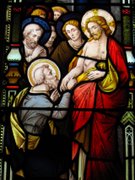
It is unfortunate that many good Christians find themselves in this awkward dilemma. Yet as much as some of these emails can be inspiring to read, there is really no need to suffer any scruples over them. Too frequently, these writings not only cause unnecessary guilt but they also invite superstition. Usually, they also insinuate that if you love Jesus, you will have the good sense to share it with so many others, if you don't, then obviously you won't. In this aspect, they are no different from chain letters that promise some retribution or at the very least, the deprivation and loss of some blessing if a reader fails to pass them on.

In reality, authors who pen these things are presumptuous in describing the love of God in such terms.

If we do love God, there are certainly changes in our lives we should hasten to embrace to ensure that holiness and sincerity reign in all our thoughts and actions, since only in the truth of the Gospels is there any hope for happiness and peace in our lives.

Discipleship does not consist in merely forwarding an inspiring email to a certain number of people and then feeling like we've done our part for evangelising.

As such, I can't help wondering how different folks who rally around such minimalist approaches to religion are, as opposed to people who similarly build their faith around endless novenas and St Jude prayers and the recitation of a certain number of prayers on certain days.

Such an attitude towards faith and salvation is totally unchristian and founded instead on the magical assumption that we can control and dominate God by fulfilling a certain set of devotions.

The pagan spiritual world of magic and religion almost always consists of formulas to follow in order to obtain spiritual help. And in many ways, they also come equipped with the understanding that dark days will come upon him who fails to observe these practices.

A religion based on instilling fear of spiritual backlash is not a true religion.

Rather, the fear and reverence of God prescribed by the Old Testament is an allusion to a different kind of fear.

There is Holy Fear, which does not grip the soul in panic but rather imbues it with a humbling sense of tremendous wonder and awe, which is not only natural but also bound up with our duty and reverence towards God as our Creator. And then there is superstitious fear, the kind that is bound up with the same anxieties associated with darkness, snakes and evil that we find so common in our human psyche.

That is the kind of fear and relationship with God that the enemy seeks to introduce into our lives under the masks of "authentic" devotions.

But as you well know, there can be no authentic relationship where love is transplanted with formulaic transactions and where our spiritual health depends only upon so many emails we send to so many people, before slipping back to our morally complacent lives with an eased conscience.

We should remember that darkness often seeks to sow superstition in the heart of real religion.

When I do come across something inspiring and feel inclined to pass it on to individuals I think would benefit from its messages, I do forward the mail, but only after I delete the ridiculous portion crying.."If you love Jesus, send this to so many people etc."

That is an example of corrupting the Christian message of love as well as using the Lord's name in vain.

The idea that we can pry open a treasury of grace by following an exterior set of "magical" formulas is silly. That is also why whenever we come across stacks of chain letters to St Jude where the petition carries with it the obligation to reproduce these letters and leave them in church, we should promptly throw them in the trash, for that is our Christian duty before God and the Magisterial Church.

However, there will always be those who prefer this kind of sentimental faith, the same kind that appeals to Christians who claim to tell fortunes through tarot cards and read your palms while invoking the name of St Anthony or some other saint, as if by that safeguard, they somehow legitimise their superstition as falling within the realm of approved religion.

Why do so many prefer it?

Because it costs less in terms of the repentance and conversion that is needed in real faith.

That's almost similar to the Pharisees and scribes who go through the motions of offering a couple of sheep and goats as token worship to Yahweh, but whose lives largely never change.

Many people who go to novena services often do so because they want something, and that something they want is more often than not, NOT a conversion of their lives.

Indeed, formulas deprived of their original intention give many of us an excuse to do the barest minimum for Christ, and still expect to be blessed with material rewards. Hence the popularity of chain letters that come hidden under the guise of genuine devotions.

After all, doesn't Christian tradition describe how Satan often takes on the appearance of an angel of light?

Now you might ask, what about services or devotions like Triduums and Novenas or even the traditional practice of saying 3 Hail Marys through the day? And let us not forget the 5 decades of the Rosary. How are these different?

Well to start with, the incidental number of days or prayers connected with these devotions are just that...incidental. They don't have any magical powers associated with them. If you don't complete 9 days in a novena, it doesn't mean that you offend heaven or commit a sin.

Secondly, there is no compulsion to perform them. You are not a bad Catholic if you do not believe in their efficacy or practice. The worst you can be accused of is a lack of charity and appreciation for such ancient devotions that have brought blessings and consolations to so many generations.

But to each his own. It is the Gospel of Jesus Christ that is essential to our salvation, all others simply aid us towards that.

The word "Novena" is Latin for 9 days at a time when early Christians performed acts of charity or held certain days of prayer vigils to commemorate and honour a certain aspect of the Gospel. The length of these devotions are set so as to impress upon the penitents a sense of pilgrimage, as they journey through the different meditations and arrive at a destination in their prayer which usually culminates in benediction or a celebration of the Mass.

Having a certain number of devotional days to celebrate is much akin to the ancient wedding and religious feasts of those days. Weddings in the time of Christ for instance went on for weeks like in the Gospel story of Cana. The feast of the tabernacles or Passover was also a celebration that went on for a good number of days.

Novena services simply honour that tradition of a family celebration, where we journey as pilgrims together on the move, from one theme or day of prayer to the next, recalling the reasons for our redemption and so forth.

They are undertaken so as to draw closer to God, and to afford a greater union to His love by taking special time to meet Him in our busy schedule.

This is the same rationale behind things like Tridiums (3 days), the Spiritual Exercises of St Ignatius (30 days retreat), LENT (40days)...all of which are just invitations to set aside time for God and commit ourselves to meeting him everyday for a determined period.

The number of days are not important.

It's almost like a man saying, "I have been so busy recently that I rarely give time to my family apart from those sporadic moments after work each evening. But despite my busy schedule, perhaps I can commit myself to spend the next 10 days in really giving myself to my wife and children, and recalling my vocation as a Christian husband and father. Hopefully that will help me to grow deeper in my love and appreciation for them. Even though my work will not ease up, I make this commitment because I know how important they are to me."

The same principle applies. The numbers are not magical. 40 days of Lent commemorate the 40 days of Jesus in the desert and the 40 years of Israel wandering in the desert in anticipation of God's promise. 9 days in a Novena (although a Novena can be made with any number of days that you personally determine) simply evolved from the ancient Roman custom of those days, when pagan Rome had a traditional 9-day devotion to appease their Gods by offering sacrifice and prayer.

As Rome became Christianised, the early Christians replaced the Roman practice of sacrificing to their Gods with 9 days of vigils and prayers in honour of Christ and His saints instead, to signify that Jesus had conquered, overcome and replaced the old pagan religions and customs with the Gospel light of Himself.

That was a symbolic act to say that the old had passed away and the new was here to stay.

Some traditions however attribute this popular vigil to the 9 days that the apostles were believed to have spent in prayer before the descent of the Holy Spirit during Pentecost.

The novena prayers to St Jude work on the same basis. The numbers of days simply connote a sense of commitment and sincerity in following something through. They are not magical. For people who believe otherwise, they get terribly upset whenever their prayers are not answered after completing this routine, as if we can make God a prisoner by forcing Him to uphold His part of the bargain since we are fulfilling the formula.

God is not a genie living in a lamp whom we rub 3 times and utter some incantation. Why should St Jude bother with someone whose sole purpose in performing some religious devotion is to gain temporal favours? It's his role and special interest to intercede for us that we might become better disciples and be saved. And if part of that in God’s plans means having our prayers granted, then that is up to God. It is not a condition for faith or even a road map to happiness.

These devotions we must remember, are meant to bring the person into closer union with God. They are spiritual exercises meant to strengthen faith and charity. They are NOT activities that unfailingly promise favours, which is mostly why people perform them; to seek gifts apart from the giver, as if by our very attendance to these things, we are doing God a favour and therefore He should show us His gratitude by answering our prayers. If not, we'll just hop onto the next passing wagon of cheap rituals that promise something else.

These prayers and practices are intended to help Christians find the strength to carry their crosses, not remove them. For without the cross, how can we ever be lifted up to the heavens? Without Good Friday, how can there be any Easter Sundays in our lives? And without Calvary, will we ever see the Resurrection?

By the way, the Novena, (private or public) is not an official part of the Church's liturgy despite being widely popular among the faithful for ages.

So back to the issue of these inspirational chain letters, don't feel too badly if you choose to ignore them. In as much as we can evangelise through these things, I hardly think that this constitutes spreading the Good News. If we were to content ourselves to merely this as disciples, we should really re-look our motivations and generosity in making Jesus known and loved.

After all, this requires no sacrifice save the effort of your finger upon the keyboard.

But we are asked to do more, much more.

So if you come across something you'd like to pass on, by all means. But delete the bit that sounds like a chain mail. It’s an insult to Christianity. Let it be your personal intention and even then, only send it to people whom you want to say something to. Then follow up on this with real efforts to spread the Good News in your life.

The only multiplication we need in our religious duties is the increase of grace in our lives, without which all is vanity.

Monday, October 15, 2007

My guardian dear

Few things in life burden the human heart with greater sadness than loneliness. To awake each morning to the pangs of unwanted solitude can be emotionally crippling to our self-esteem. Our senses long to know the touch of a loved one, our eyes seek to rest upon the smile of a guardian, and our hearts sigh for the faithful love and friendship of a kindred spirit.

And although many of us truly struggle with a deep lack of human affection, most of us also fail to recognize the companions we’ve been blessed with all our lives.

Earlier this month, we celebrated the Feast of Sts. Michael, Gabriel and Raphael, as well as the feast of the Guardian Angels. During those days, the Church celebrated the gift of these heavenly spirits with joy, although throughout the year, angels are constantly present to us also in the scriptures as beacons of light in our pilgrimage towards the City of God.

Every Catholic child is brought up to believe in a personal guardian angel who watches over him/her from cradle to grave. I too recall being given a beautiful prayer card when I was about seven years old; which depicted an angel watching over two little children with great tenderness and love - his powerful wings stretched over them as a gentle shade as they picked flowers along a brook - his eyes never far from their faces.

Of course as Christians we believe in the existence of Angels since it is a matter of scriptural and doctrinal truth, but the idea of a personal guardian angel seems more suitable for children; just like Santa Claus, fairies and elves. Adults in a sense should know better than to indulge in such naivety.

But is it really immature to believe in guardian angels? Let’s think about that for a moment. Who among us need guardians? The young and vulnerable certainly, but also the weak and defenseless.

Alright, but who else? The rich and powerful surely want to be protected from envious enemies who may wish them harm, but equally deserving of this help would be the prominent children of royalty and heads of state.

I think of how young royals, or the children of Presidents etc, are constantly caught on camera accompanied by their armed bodyguards or secret service agents wherever they go. Understandably, this vanguard of safety enforces some degree of necessary protection.

For some however, this relationship is more than just a security detail. In times past especially, the personal bodyguard is not just protector and shield, but also mentor and confidante. His mission is to constantly look out for his young charges, to ever remind them of their exalted dignities – and by association – their royal duty to always live and act in ways worthy of such dignity.

Far away from the comforts of palace and throne, whether at work, at play or in school, the bodyguard reflects and recalls the memory of the king upon his royal charges; so that despite the natural vigor and adventure of youth, the young royals may not forget their own princely dignity, but always be reminded of their duty, honor and special calling in life.

When this guardian is not protecting, he is counseling, tutoring, encouraging and consoling his young friends.

Now as children of the King of Kings, are we thus not children of royalty? And as children of God, are we hence not vulnerable to the preying intents of His enemies, who desire nothing more than to see us lose our heavenly inheritance through sin.

As such, far away from our heavenly home, do we not need and deserve a spiritual mentor and bodyguard to watch over us until the time comes for us to return safely to our Father’s house?

Of course we do, lest we forget our true dignity as children of God, and embrace a lifestyle and attitude more akin to animals.

Indeed, our Heavenly Father commands that for every one of his sons and daughters, there should be entrusted an angel of light as guardian; to accompany, lead, teach, protect, guide, console and defend always. And like the best of the best, our spiritual bodyguards come to us from God’s own elite army.

These magnificent soldiers of Christ are not cold, nor frightening in their sense of duty before God. Rather they love us with the tenderness of God’s own flaming heart, and seek nothing less than to set our own hearts afire with love for God. They are solicitous to our needs, desirous of our happiness, and faithful to us from cradle to grave.

They are as St. Padre Pio often claimed; our dearest companions on earth. Sons of God in whom his glory is made manifest and his will enthroned for our sakes. They are our friends, our elder brothers in Christ, and our dearest companions from young. They are our own guardian angels, no one else's.

Now it is not enough for us to know that we have a protector and guardian, we should also remember that we have a mentor, confidante, brother and friend, with whom we can open our hearts without fear or regret.

With every step we take in this life, a strong arm is there to support us in love and courage, assuring us that God is ever with us. One of the most beautiful images in scripture for me is the verse about the Archangel Raphael personally offering the prayers, sighs and petitions of Tobit before the face of God, joining his own angelic voice to the prayer of this poor man; interceding for him before the Most High.

Such is the devotion of the angels to us, lest we should lose heart and forget that God exists, and yes he loves us.

The next time we feel alone, let us not forget to turn our minds and hearts to this faithful, loyal and heavenly companion - to ask his help and guidance in all things, to seek his counsel and prayers, to speak, smile, cry and celebrate the joys and sorrows of this life with - for he is eager to serve and lead us to Christ, who is our common master in life and in death.

So to all those who read this, I salute you and your angel with love, and I leave you with this childhood prayer, since those of us who have experienced this friendship know that guardian angels in particular, show us the face of God in a world bereft of supernatural vision:

“Angel of God, my guardian dear. To whom God’s love entrusts me here. Ever this day be at my side, to light and guard, to rule and guide. Amen”

Tuesday, October 2, 2007

Fishers of Men (Part 1) AWESOME!

A beautiful vocation video for those of you discerning a call to the priesthood

Fishers of Men (Part 2) AWESOME

Second part of this very well done vocation video